QUATUOR(S) Danel & Mosaïques

Saturday 28 March ı 5:00 PM
One Monte-Carlo
Before
10:00 AM - 1:00 PM - MASTERCLASS - Conservatoire à Rayonnement Régional de Nice

Marc Danel, violin

Reservation
3:30 PM - LECTURE - One Monte-Carlo, Amphithéâtre

“The Thwarted Destiny of the String Quartet in France” 
Jean-François Boukobza, musicologist

Reservation
5:00 PM - CONCERT - One Monte-Carlo
<div>
<p class="Standard"><b><span lang="EN-US">Pascal Dusapin </span></b><span lang="EN-US">(1955-)<br />
</span><i><span lang="EN-US">Quatuor à cordes No. 4 &#8211; </span></i><span lang="EN-US">15 min</span></p>
</div>
<div>
<p class="Standard"><b><span lang="EN-US">Juan Crisóstomo de Arriaga </span></b><span lang="EN-US">(1806-1826)<br />
</span><em>String Quartet No. 3 in E-flat Major</em> &#8211; 25 min</p>
</div>
<div>
<p class="Standard"><span lang="EN-US">1. Allegro<br />
</span>2. Pastorale. Andantino<br />
3. Menuet<br />
4. Presto agitato</p>
</div>
<div>
<p class="Standard"><b><span lang="EN-US">Gabriel Fauré </span></b><span lang="EN-US">(1845-1924)<br />
</span><i><span lang="EN-US">String Quartet in E Minor, </span></i><span lang="EN-US">op. 121 &#8211; 25 min</span></p>
</div>
<div>
<p class="Standard"><span lang="EN-US"> 1. Allegro moderato</span><span lang="EN-US"><br />
</span><span lang="EN-US"> 2. Andante</span><span lang="EN-US"><br />
</span><span lang="EN-US"> 3. Allegro</span></p>
</div>
<div>
<p class="Standard"><b><span lang="EN-US">Pascal Dusapin </span></b><span lang="EN-US">(1955-)<br />
</span><i><span lang="EN-US">Quatuor à cordes No. 4 &#8211; </span></i><span lang="EN-US">15 min</span></p>
</div>
<div>
<p class="Standard"><b><span lang="EN-US">Juan Crisóstomo de Arriaga </span></b><span lang="EN-US">(1806-1826)<br />
</span><em>String Quartet No. 3 in E-flat Major</em> &#8211; 25 min</p>
</div>
<div>
<p class="Standard"><span lang="EN-US">1. Allegro<br />
</span>2. Pastorale. Andantino<br />
3. Menuet<br />
4. Presto agitato</p>
</div>
<div>
<p class="Standard"><b><span lang="EN-US">Gabriel Fauré </span></b><span lang="EN-US">(1845-1924)<br />
</span><i><span lang="EN-US">String Quartet in E Minor, </span></i><span lang="EN-US">op. 121 &#8211; 25 min</span></p>
</div>
<div>
<p class="Standard"><span lang="EN-US"> 1. Allegro moderato</span><span lang="EN-US"><br />
</span><span lang="EN-US"> 2. Andante</span><span lang="EN-US"><br />
</span><span lang="EN-US"> 3. Allegro</span></p>
</div>
Without intermission

Pascal Dusapin (1955-)
Quatuor à cordes No. 4 – 15 min

Juan Crisóstomo de Arriaga (1806-1826)
String Quartet No. 3 in E-flat Major – 25 min

1. Allegro
2. Pastorale. Andantino
3. Menuet
4. Presto agitato

Gabriel Fauré (1845-1924)
String Quartet in E Minor, op. 121 – 25 min

 1. Allegro moderato
 2. Andante
 3. Allegro

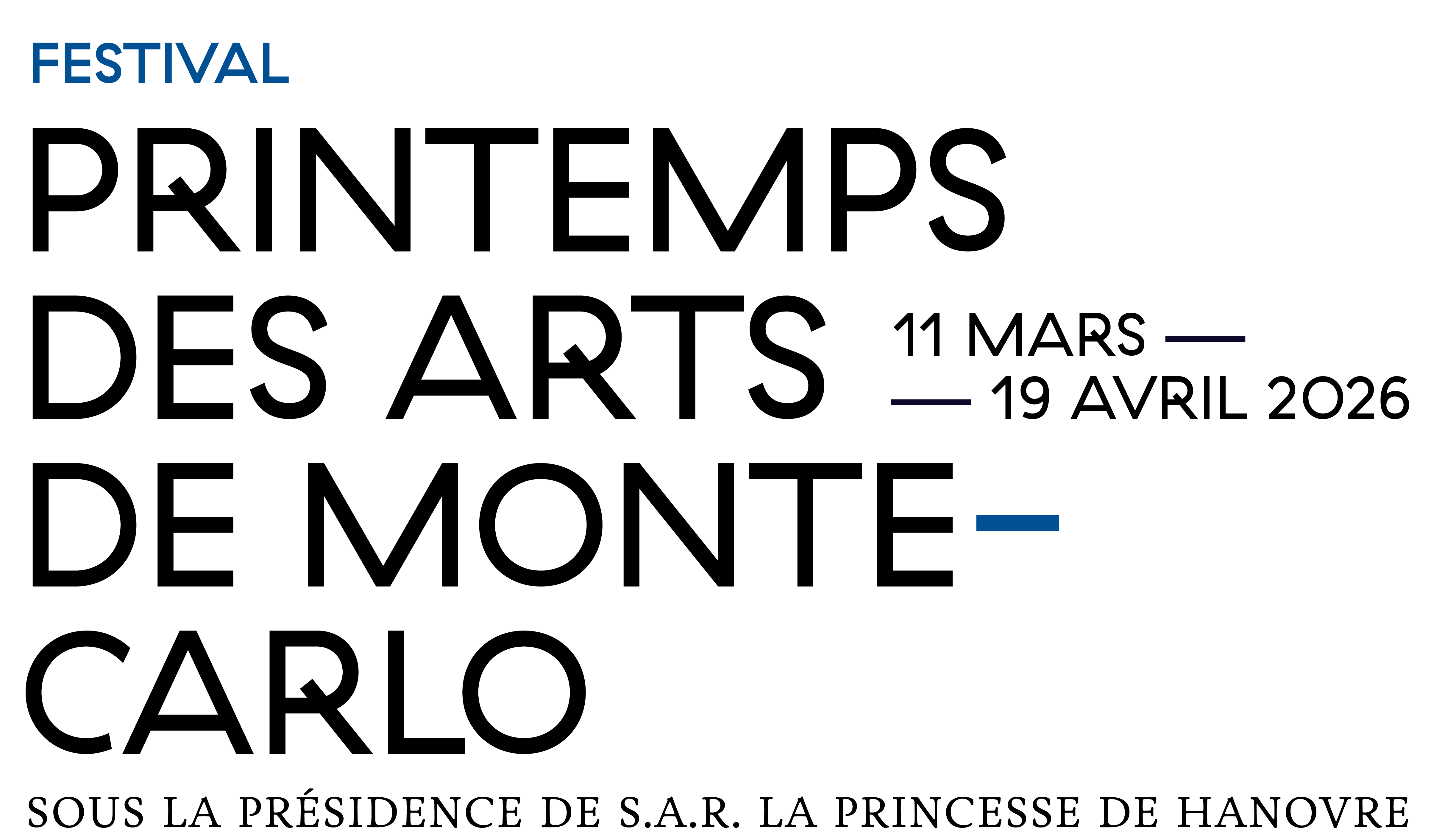
Quatuor Danel
Marc Danel et Gilles Millet, violins
Vlad Bogdanas, viola
Yovan Markovitch, cello
 
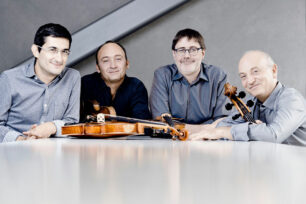
Quatuor Mosaïques
Erich Höbarth, Andrea Bischof and Anita Mitterer, violins
Christophe Coin, cello

It is a rare experience which is proposed by quartets Mosaïques and Danel: the two well-established ensembles have combined their characteristics to run down the whole history of the string quartet in France. The curved bows and gut strings of Mosaïques will exalt the pioneering works of the little-known Hyacinthe Jadin and Juan Crisóstomo de Arriaga. The modern bows and metal strings of Quatuor Danel will perform the last works of the end of the romantic period (César Franck, Camille Saint-Saëns and Gabriel Fauré) and raise the curtains with the modernity of Pascal Dusapin.

Concert prices
Standard rate
20

Online booking

You can book your tickets on Monte-Carlo Ticket website !
INFORMATION
PARKING

In general, the night rate is applicable from 7 p.m.: €0.20 every 15 minutes*

Except for the events for which the "Festival Printemps des Arts" show package applies

* Subject to change

More information

Gut strings or metal strings, curved bows and straight bows, increasingly sophisticated playing techniques –  these two concerts attest to the extreme malleability of the string quartet and its resistance to the most diverse and sometimes most distant aesthetics. The programmes also highlight the importance of the genre in France, despite its often troubled history. Several thousand quartets were published in Paris in the second half of the 18th century. Many composers, both French and foreign, had their works published there. This popularity was the result of a virtuous circle: a booming instrument-making industry, active publishers, an audience eager for new works, a violin school renowned throughout Europe, and a proliferation of venues for performances, held at courts, in aristocratic palaces and in bourgeois residences.

Paris was not only a city where quartets were performed, it was also a capital where musicians were trained and came to study. A young professor at the newly created Conservatory, Hyacinthe Jadin left behind a body of work of great interest despite his early death at the age of 24. His String Quartet in E-flat major, published in 1796, reflects Haydn’s influence through its delicate work on motifs and careful dramatic construction. An introductory “Largo” reveals the high quality of the writing from the very first moments: the elaborate counterpoint, the constant concern for varying the harmonies, the presence of expressive dissonances, the variation of the same element presented in different lights. The solemn and contemplative atmosphere of the first few bars is broken by an “Allegro” that follows without pause, marked by economy of material and the finesse of the concertante work. The slow movement borrows its main motif from the second theme of the first movement, before the minuet provides some contrast with its stylised connection to dance. The finale is dominated by the calls of the violin, chromaticism, and constant reformulations of the main theme.

While Jadin taught piano, Juan Crisóstomo de Arriaga arrived in the capital to study violin in Pierre Baillot’s class. A child prodigy from Bilbao, he was particularly keen to further his knowledge of composition. He wrote his three string quartets in the space of a few weeks and had them published in 1824, before dying two years later at the age of just 20. HisString Quartet No. 2 in A major  is notable for its freshness and candor, sometimes tinged with gravity. The first movement charms with its simplicity: easily memorable melodies, carefree and elegant exchanges of cues, and a clear, essentially diatonic texture. The “Andante” presents a vocal theme followed by six variations individualised by tempo, contrasting major and minor, pizzicato writing, and slithers of silence. The “Minuet” offers a brief respite before a finale based on alternating moods in turn elated or blue. In String Quartet No. 3, the tone frequently becomes anxious or pathetic due to severe unison, dotted rhythms, acidic harmonies, and abrupt caesuras. The “Minuet” offers a brief respite before a finale based on moods that alternate between exaltation and depression. The tone of the quartet frequently becomes anxious or poignant due to the harsh unison, dotted rhythms, acidic harmonies, and abrupt caesuras. The “Pastoral” is probably the most surprising movement, with its two dark passages dominated by tremolos and dissonances. The “Minuet” retains some traces of feverishness before the calm brought by a short waltz at the heart of the movement. The finale prolongs this opposition between light and shadow, adopting a tone that is alternately playful and gloomy.

A form widely popular at the end of the 18th century, the quartet gave rise to a surprising paradox a few decades later. Although chamber music societies were flourishing, composers strangely turned away from the genre, with a few exceptions such as George Onslow, Théodore Gouvy, and Adolphe Blanc, whose works did not really catch on. Great careers were then to be found on stage – in opera, dance, and theatre – or through virtuosity. It was not until the advent of fin de siècle aesthetics that the quartet emerged again – although with a new paradox: that quintessential chamber music genre remained somewhat neglected, at least in France. Édouard Lalo, César Franck, Gabriel Fauré, Ernest Chausson, Claude Debussy, and Maurice Ravel wrote only one each, while Camille Saint-Saëns wrote two, at the end of his life, like Franck and Fauré. For these three composers, the quartet became the receptacle for their creative thinking as it reached its full flowering, or even its end.

César Franck’s Quatuor à cordes en ré majeur  was completed on 10 January, 1890, a few months before the musician’s death. It reveals a refined structure in which the patterns seem to call out to one another. The slow introduction anticipates the form of the first movement, an “Allegro” which in turn foreshadows the ternary structures of the “Scherzo” and “Larghetto”. The finale serves as a mnemonic space, echoing reminiscences of the previous movements. The density of the fabric, the contrapuntal rigour, and the absence of harmonic or thematic rest place the work in a Germanic tradition, while showing some similarities with the symphony.

Dedicated to violinist Eugène Ysaÿe, Saint-Saëns’ Quatuor à cordes N°1 marks a commitment to tradition by retaining the four-part structure, the usual patterns, and the “tailor-made” writing style practiced in the classical era, which here entrusts the dedicatee  with perilous notes in the upper register. The moods change constantly, from the nostalgic introduction of the first movement to the feverish discourse of the “Allegro”, the breathless character of the “Scherzo”, the melancholic atmosphere of the “Adagio”, and the nervous and lively section that crowns the whole. As to Gabriel Fauré’s Quatuor à cordes en mi mineur, it was undertaken in September 1923, when the musician, by then deaf, was leading a life shadowed by dark moments, during which he sometimes wished for his own death. The “Andante”, the first completed movement, gives the work its soft and meditative nuances, placing the opus in an intimate atmosphere that rejects violent peaks and abrupt contrasts. The formal conciseness, the dark palette, the even character of the themes, and the spareness of the material with the sole iridescence of modal colors and contrapuntal refinement, create particularly moving autumnal tones.

Dated 1997, Pascal Dusapin’s Quatuor à cordes N°4 refers to Samuel Beckett, thanks to a short quotation noted at the end of the score which also highlights the temporal dimension of the work. Consisting of a single movement, the work offers a bumpy trajectory, based on sinuosity and shock. The form is organised around objects that crack, disintegrate, and then reassemble, while new obstacles appear amid constant tension. The instruments begin in unison, working on the same idea, then divide, turn away from each other, and reunite briefly before drifting apart again. Each fragment forms a small story which is both independent and linked to the main plot, the discourse proceeding both through accumulation and return, through erased traces as well as obscure memories that haunt the mind.

Jean-François Boukobza
Get the latest news
from the Printemps des arts

Rejoignez-nous
sur instagram