GESUALDO – MONTEVERDI La Venexiana & Duo Xamp

Wednesday 11 March ı 8:00 PM
Église Saint-Charles
Before
6:30 PM — LECTURE — Église Saint-Charles, Salle Penzo

“The Madrigal: Poetry and Music in the Age of Humanism – and Later” by Anne Ibos-Augé, musicologist

Reservation
8:00 PM — CONCERT — Église Saint-Charles
<p><strong>Carlo Gesualdo </strong>(1566-1613)<br />
<em>Quatrième Livre de madrigaux</em> – 10 min</p>
<ol start="8">
<li>Sparge la morte al mio signor nel viso</li>
<li>Io tacerò, ma nel silenzio mio</li>
</ol>
<p><strong>Toshio Hosokawa</strong> (1955-)<br />
<em>Cloudscapes &#8211; Moon Night</em>, pour deux accordéons spatialisés – 11 min</p>
<p><strong>Carlo Gesualdo</strong> (1566-1613)<br />
<em>Cinquième Livre de madrigaux – </em>14 min</p>
<ol start="19">
<li>O tenebroso giorno</li>
<li>Mercè!, grido piangendo</li>
<li>Asciugate i begli occhi</li>
<li>T’amo, mia vita</li>
</ol>
<p><strong>Théo Mérigeau </strong>(1987-)<br />
<em>XAMP Variations, </em>pièce pour duo d&#8217;accordéons, création mondiale – 8 min</p>
<p><strong>Claudio Monteverdi </strong>(1567-1643)<br />
<em>Sixième Livre de madrigaux – </em>15 min</p>
<ol start="6">
<li>Ohimè il bel viso, SV 112</li>
<li>Misero Alceo, SV 114</li>
<li>Zefiro torna e&#8217;l bel tempo rimena, SV 108</li>
</ol>
<p><strong>Victor Ibarra </strong>(1978-) – 12 min<br />
<em>A/gnôsis </em>pour deux accordéons microtonals</p>
<p><strong>Claudio Monteverdi </strong>(1567-1643)<br />
<em>Septième Livre de madrigaux</em> – 5 min</p>
<ol start="22">
<li>Al lume delle stelle, SV 138</li>
</ol>
<p><em>Huitième Livre de madrigaux</em> – 4 min</p>
<ol start="16">
<li>Dolcissimo uscignolo, SV 16</li>
</ol>
<p><strong>Carlo Gesualdo </strong>(1566-1613)<br />
<em>Quatrième Livre de madrigaux</em> – 10 min</p>
<ol start="8">
<li>Sparge la morte al mio signor nel viso</li>
<li>Io tacerò, ma nel silenzio mio</li>
</ol>
<p><strong>Toshio Hosokawa</strong> (1955-)<br />
<em>Cloudscapes &#8211; Moon Night</em>, pour deux accordéons spatialisés – 11 min</p>
<p><strong>Carlo Gesualdo</strong> (1566-1613)<br />
<em>Cinquième Livre de madrigaux – </em>14 min</p>
<ol start="19">
<li>O tenebroso giorno</li>
<li>Mercè!, grido piangendo</li>
<li>Asciugate i begli occhi</li>
<li>T’amo, mia vita</li>
</ol>
<p><strong>Théo Mérigeau </strong>(1987-)<br />
<em>XAMP Variations, </em>pièce pour duo d&#8217;accordéons, création mondiale – 8 min</p>
<p><strong>Claudio Monteverdi </strong>(1567-1643)<br />
<em>Sixième Livre de madrigaux – </em>15 min</p>
<ol start="6">
<li>Ohimè il bel viso, SV 112</li>
<li>Misero Alceo, SV 114</li>
<li>Zefiro torna e&#8217;l bel tempo rimena, SV 108</li>
</ol>
<p><strong>Victor Ibarra </strong>(1978-) – 12 min<br />
<em>A/gnôsis </em>pour deux accordéons microtonals</p>
<p><strong>Claudio Monteverdi </strong>(1567-1643)<br />
<em>Septième Livre de madrigaux</em> – 5 min</p>
<ol start="22">
<li>Al lume delle stelle, SV 138</li>
</ol>
<p><em>Huitième Livre de madrigaux</em> – 4 min</p>
<ol start="16">
<li>Dolcissimo uscignolo, SV 16</li>
</ol>
No intermission

Carlo Gesualdo (1566-1613)
Quatrième Livre de madrigaux – 10 min

  1. Sparge la morte al mio signor nel viso
  2. Io tacerò, ma nel silenzio mio

Toshio Hosokawa (1955-)
Cloudscapes – Moon Night, pour deux accordéons spatialisés – 11 min

Carlo Gesualdo (1566-1613)
Cinquième Livre de madrigaux – 14 min

  1. O tenebroso giorno
  2. Mercè!, grido piangendo
  3. Asciugate i begli occhi
  4. T’amo, mia vita

Théo Mérigeau (1987-)
XAMP Variations, pièce pour duo d’accordéons, création mondiale – 8 min

Claudio Monteverdi (1567-1643)
Sixième Livre de madrigaux – 15 min

  1. Ohimè il bel viso, SV 112
  2. Misero Alceo, SV 114
  3. Zefiro torna e’l bel tempo rimena, SV 108

Victor Ibarra (1978-) – 12 min
A/gnôsis pour deux accordéons microtonals

Claudio Monteverdi (1567-1643)
Septième Livre de madrigaux – 5 min

  1. Al lume delle stelle, SV 138

Huitième Livre de madrigaux – 4 min

  1. Dolcissimo uscignolo, SV 16

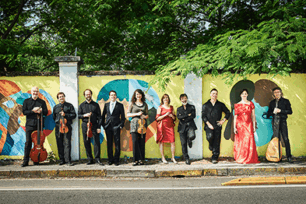
La Venexiana
Emanuela Galli, soprano
Monica Piccinini, soprano
Isabella Di Pietro, viola
Roberto Rilievi, tenor
Massimo Lombardi, tenor
Matteo Bellotto, double blass
Dario Carpanese, harpsichord
Gabriele Palomba, theorbo and artistic direction

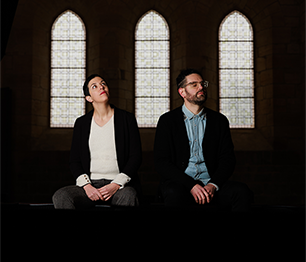
Duo XAMP
Fanny Vicens et Jean-Etienne Sotty, accordions

A panoramic opening concert for the Printemps des Arts 2026 : an ensemble specialised in Renaissance and Baroque period music, La Venexiana proposes an anthology of madrigals by Gesualdo and Monteverdi, who sing the torments of the human soul like never before. Alternating with them, Duo XAMP and their microtonal accordions venture into distant worlds, between Japanese traditions, Balinese gamelan, and echoes of early music.

Concert Prices
FREE

Online booking

You can book your tickets on Monte-Carlo Ticket website !
INFORMATION
PARKING

In general, the night rate is applicable from 7 p.m.: €0.20 every 15 minutes*

Except for the events for which the "Festival Printemps des Arts" show package applies

* Subject to change

More information

“Musical notes constitute the body of music, and lyrics are its soul. And in the same way that the soul (being nobler than the body) must be followed and emulated by the body, notes must follow and emulate lyrics, and the composer should consider them with the highest attention.”

This is how Marco Antonio Mazzone, in the preface to his first book of four-voice madrigals (1569), perfectly defined a musical genre which was then in full bloom. For, although its first instances go back to the Italian Trecento, the madrigal remains the defining genre of the Renaissance and early Baroque era.

In 1596, Carlo Gesualdo had been living in Ferrara for two years, where he married the niece of Duke Alfonso d’Este, after murdering his first wife and her lover. Although this marriage of convenience seemed more “sensible” than his previous one, the composer’s life and music remained marked by his bitter temperament. His Madrigals, Book 4, like the previous one, marks a break from the traditional understanding of the genre. Sparge la morte al mio signor nel viso andIo tacerò, ma nel silenzio mio are filled with deploring sighs, dissonances and abrupt changes of timbre, chromaticism and false harmonies, mirroring the anonymous texts they accompany. These texts paint a picture of love that is often tormented, even though a few sudden flashes of light sometimes suggest a happy ending. In 1611, the following book confirmed this direction, expressing a feeling still tinged with despair (T’amo, mia vita): the harmonic sequences and chromatic lines are astonishing in their audacity (Mercè!, grido piangendo), the imitations play on rhythmic shifts to better embrace the poetic discourse (Asciugate i begli occhi), while the final cadences choose to suspend it (O tenebroso giorno).

Three years later, Monteverdi, freshly appointed chapel master at San Marco in Venice, publishes in turn his Madrigals, Book 6, in which the old coexists with the new. Ohimè il bel viso and Zefiro torna e’l bel tempo rimena, both based on poems by Petrarch, most likely date from the composer’s Mantua period. The text is powerful, from the haunting initial cry (“Ohimè”) of the first to the figurative language of the second, whose despair culminates in a final “deserto”. In a different vein, Misero Alceo contrasts a solo tenor and his tormented continuo with a “commenting” ensemble, strictly materializing the division (“diviso”) of the hero’s heart. Monteverdi takes another step forward with the 1619 collection, towards a new musical genre with its own characteristics. From the frontispiece – even before the title of Madrigals, Book 7 – the word “concerto” is announced. Duets, trios, and quartets replace the traditional five voices, while the stile concertato creates a dialogue between voices and instruments. While the beginning of Al lume delle stelle still bears the mark of the French-Flemish composer Giaches de Wert, the rest of the piece follows Tasso’s text, with calm succeeding agitation and the four voices combining in various ways throughout the poem. The concerto spirit is even more pronounced in Dolcissimo uscignolo, a “love” madrigal from the eighth and final book of 1638, Monteverdi’s true “madrigal testament”. There is no contrast here: in this lament, curiously called “alla francese”, the joyful song of the bird and the sadness of the lover merge into a single vocalization.

Interwoven with these pieces are three compositions for accordion duets, each playing with the past in its own way while remaining firmly rooted in the present and drawing freely on certain non-European materials. A transcription of a piece for shō (a bamboo pipe organ) and accordion, Cloudscapes – Moon Night by Toshio Hosokawa (1998), plays with spatialisation: the two instruments respond to each other in a revisited polyphony coloured by the Gagaku, a traditional Japanese court art form of which the shō is a main instrument. Resonances and echoes, fluctuating soundscapes with occasionally tense harmonies, construct a shifting, distant and mysterious world traversed by tiny rhythmic vibrations.

Very different is the world of Théo Mérigeau, whose duet – a sequel to the XAMP Concerto of 2024 – is given its world premiere here. Virtuosic and jubilant, the piece offers a sort of toccata with offbeat motifs in a polyrhythm inspired by Balinese gamelan practice – and also by even older practices of hiccuping!

More obviously referential to the Renaissance world, Victor Ibarra’s A/gnôsis (2021) offers subtle microtonal writing with striking timbral effects, and after a very voluble central section, ends with a complete quotation from Dufay’s motet Ave Maris stella, lontano and pianissimo. To this tune, one of the accordions leaves the stage while the other remains, as if unaware of what is moving away from it. Thus the circle of past and present is closed, like a journey into musical worlds that are both close and distant – including other bodies and souls of music beyond those referred to by Marco Antonio Mazzone in relation to the madrigal.

Anne Ibos-Augé
Get the latest news
from the Printemps des arts

Rejoignez-nous
sur instagram