
POSTLUDE - MINIATURES (From Thursday 16 to Sunday 19 April) Les Ballets de Monte-Carlo

Thursday 16 April ı 7:30 PM
Opéra de Monte-Carlo, Salle Garnier
7:30 PM, except for the Sunday at 3:00 PM - BALLETS - Opéra de Monte-Carlo, Salle Garnier
<div>
<p class="Standard"><b><i><span lang="EN-US">Miniatures</span></i></b></p>
</div>
<div>
<p class="Standard"><span lang="EN-US">Martin Matalon (1958-), <i>Caravansérail 2 *  &#8211; </i></span><span lang="EN-US">12 min<br />
</span><strong>Julien Guerin</strong>, choreography</p>
<p>Misato Mochizuki (1969-), <i>Sakiwaï &#8211; Wabi-sabi bloom * &#8211; </i>9 min<br />
<strong>Mimoza Koike</strong>, choreography</p>
<p><span lang="EN-US">Aurélien Dumont (1980-), <i>Steps for Beasts that Never Were * &#8211; </i></span><span lang="EN-US">11 min<br />
</span><strong>Jeroen Verbruggen</strong>, choreography</p>
<p><span lang="EN-US">Violeta Cruz (1986-), <i>Huit carrés rouges * &#8211; </i>1</span><span lang="EN-US">2 min<br />
</span><strong>Francesco Nappa</strong>, choreography</p>
<p><span lang="EN-US">Bruno Mantovani (1974-), <i>L&#8217;ivresse, </i>for string quartet &#8211; </span><span lang="EN-US">11 min<br />
</span><strong>Jean-Christophe Maillot</strong>, choreography</p>
<p><span lang="EN-US">Ramon Lazkano (1968-), <i>Lur-Itzalak, </i>for violin and cello &#8211; </span><span lang="EN-US">10 min<br />
</span><strong>Jean-Christophe Maillot</strong>, choreography</p>
</div>
<div>
<p class="Standard"><b><i><span lang="EN-US">Miniatures</span></i></b></p>
</div>
<div>
<p class="Standard"><span lang="EN-US">Martin Matalon (1958-), <i>Caravansérail 2 *  &#8211; </i></span><span lang="EN-US">12 min<br />
</span><strong>Julien Guerin</strong>, choreography</p>
<p>Misato Mochizuki (1969-), <i>Sakiwaï &#8211; Wabi-sabi bloom * &#8211; </i>9 min<br />
<strong>Mimoza Koike</strong>, choreography</p>
<p><span lang="EN-US">Aurélien Dumont (1980-), <i>Steps for Beasts that Never Were * &#8211; </i></span><span lang="EN-US">11 min<br />
</span><strong>Jeroen Verbruggen</strong>, choreography</p>
<p><span lang="EN-US">Violeta Cruz (1986-), <i>Huit carrés rouges * &#8211; </i>1</span><span lang="EN-US">2 min<br />
</span><strong>Francesco Nappa</strong>, choreography</p>
<p><span lang="EN-US">Bruno Mantovani (1974-), <i>L&#8217;ivresse, </i>for string quartet &#8211; </span><span lang="EN-US">11 min<br />
</span><strong>Jean-Christophe Maillot</strong>, choreography</p>
<p><span lang="EN-US">Ramon Lazkano (1968-), <i>Lur-Itzalak, </i>for violin and cello &#8211; </span><span lang="EN-US">10 min<br />
</span><strong>Jean-Christophe Maillot</strong>, choreography</p>
</div>
<div>
<p class="Standard"><b><i><span lang="EN-US">Miniatures</span></i></b></p>
</div>
<div>
<p class="Standard"><span lang="EN-US">Martin Matalon (1958-), <i>Caravansérail 2 *  &#8211; </i></span><span lang="EN-US">12 min<br />
</span><strong>Julien Guerin</strong>, choreography</p>
<p>Misato Mochizuki (1969-), <i>Sakiwaï &#8211; Wabi-sabi bloom * &#8211; </i>9 min<br />
<strong>Mimoza Koike</strong>, choreography</p>
<p><span lang="EN-US">Aurélien Dumont (1980-), <i>Steps for Beasts that Never Were * &#8211; </i></span><span lang="EN-US">11 min<br />
</span><strong>Jeroen Verbruggen</strong>, choreography</p>
<p><span lang="EN-US">Violeta Cruz (1986-), <i>Huit carrés rouges * &#8211; </i>1</span><span lang="EN-US">2 min<br />
</span><strong>Francesco Nappa</strong>, choreography</p>
<p><span lang="EN-US">Bruno Mantovani (1974-), <i>L&#8217;ivresse, </i>for string quartet &#8211; </span><span lang="EN-US">11 min<br />
</span><strong>Jean-Christophe Maillot</strong>, choreography</p>
<p><span lang="EN-US">Ramon Lazkano (1968-), <i>Lur-Itzalak, </i>for violin and cello &#8211; </span><span lang="EN-US">10 min<br />
</span><strong>Jean-Christophe Maillot</strong>, choreography</p>
</div>

Miniatures

Martin Matalon (1958-), Caravansérail 2 *  – 12 min
Julien Guerin, choreography

Misato Mochizuki (1969-), Sakiwaï – Wabi-sabi bloom * – 9 min
Mimoza Koike, choreography

Aurélien Dumont (1980-), Steps for Beasts that Never Were * – 11 min
Jeroen Verbruggen, choreography

Violeta Cruz (1986-), Huit carrés rouges * – 12 min
Francesco Nappa, choreography

Bruno Mantovani (1974-), L’ivresse, for string quartet – 11 min
Jean-Christophe Maillot, choreography

Ramon Lazkano (1968-), Lur-Itzalak, for violin and cello – 10 min
Jean-Christophe Maillot, choreography

Co-produced with Les Ballets de Monte-Carlo and the Ensemble Orchestral Contemporain

Les Ballets de Monte-Carlo

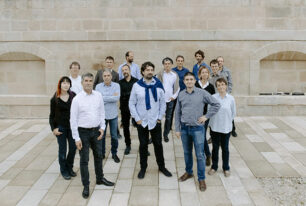
Ensemble Orchestral Contemporain
Fabrice Jünger, flute
François Salès, oboe
Hervé Cligniez, clarinet
Gilles Peseyre, trumpet
Marc Gadave, trombone
Gaël Rassaert, violin
Céline Lagoutière, violin
Patrick Oriol, viola
Valerie Dulac, cello
Rémi Magnan, double bass
Claudio Bettinelli, drums
Roxane Gentil, piano

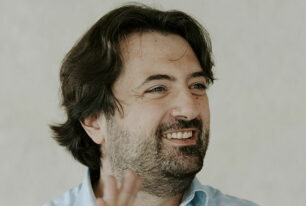
Bruno Mantovani, conductor

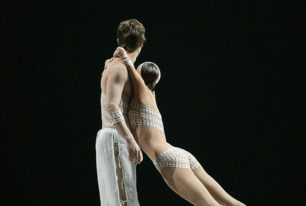
For the Printemps des Arts 2004, then artistic director Marc Monnet had commissioned “miniatures” from seven composers, which had then been choreographed by Les Ballets de Monte-Carlo. This year, one of the seven 2004 commissionees, who became in turn artistic director of the festival, launched the idea of extending the experience. Bruno Mantovani thus invites you to (re)discover two ballets created 22 years ago, accompanied by four new creations commissioned from four new composers and choreographers.

Concert prices
Ticket office of the Ballets de Monte-Carlo

Online booking

You can book your tickets on Monte-Carlo Ticket website !
INFORMATION
PARKING

In general, the night rate is applicable after 8 p.m.: €0.20 every 15 minutes*


Except for the events for which the "Festival Printemps des Arts" show package applies: 6€ for parking during the day, upon showing your concert ticket

* Subject to change

More information

For Printemps des Arts de Monte-Carlo 2004, then artistic director Marc Monnet commissioned “miniatures” from seven composers, which were then choreographed for the Ballets de Monte-Carlo. In 2025, one of the seven commissionees, by then turned himself artistic director of the Festival, thought of extending the experience. This is how Bruno Mantovani decided to stage again two of the ballets created twenty years earlier – his own Ivresse for string quartet and Lur-Itzalak by Ramon Lazkano – and to commission four pieces from four new composers: Violeta Cruz, Aurélien Dumont, Martin Matalon and Misato Mochizuki.

The appeal of such an experiment lies in its systemic nature. How will so many creators tackle a single commission? Violeta Cruz and Martin Matalon responded like architects. In Huit carrés rouges, Cruz says she explored “a minimalist language that can be likened to abstract art: surfaces, volumes, lines, curves, freed from any evocation, yet capable of generating dynamism and vitality (…). While writing this piece, I think about how, in architecture, the choices of dimensions, proportions, materials, and textures condition the way we experience a space and create striking sensory experiences”.

Martin Matalon also claims a form of abstraction, having conceived his Caravansérail 2 as a succession of four linked sections: “Each of the four states of this work is defined by its own musical characteristics: instrumentation, dynamics, character of the material, number of layers or, conversely, the uniqueness of a single layer, instrumental color, rhythmic activity… A complementary relationship is established between the movements in order to create polarities between the sections and provide the choreographer with multiple material to build his narrative from.”

For both Bruno Mantovani and Aurélien Dumont, it was the need for energy that sprang forth. The former conceived his string quartet L’Ivresse as music that is “violently contrasting, arid, virtuosic. The discourse revolves around a few ideas that are easily identifiable when listening (unison in the high register, homorhythms, etc.). In the midst of this ocean of uncertainty and unpredictability, a more procedural sequence establishes continuity, still with energy, which gives the material an even more abrupt character.”

As for Aurélien Dumont, he drew inspiration from an extra-musical source: Philip K. Dick’s short story “The Preserving Machine”. “In it, an inventor builds a machine that transforms musical scores into wild animals in order to preserve them from a potential flood. This most bizarre experiment turns into a fiasco in an ecosystem where the wild beast Wagner, the lamb Schubert, the birds Mozart and Stravinsky, and the fly Bach are bound to meet.” His piece Steps for Beasts that Never Wereattempts to represent, within a haunting ostinato, the metamorphosis of a few brief quotations from the aforementioned composers into uncontrollable musical organisms, into pure sonic energy.”

Finally, Ramon Lazkano and Misato Mochizuki played with memory and the passage of time. The fleeting harmonics of the violin and cello in Lur-Itzalak (“Shadows of Earth” in Basque) sound like echoes of an elusive original music. Lazkano deliberately uses “modes of sound production that weaken and destabilise it, around conventional objects that are connotative, vague, inaudible, and loaded with meaning in their reference to a dizzying memory.”

Misato Mochizuki worked closely with “her” choreographer, Mimoza Koike, who wanted to honor former dancers who were among the founding members of the Ballets de Monte-Carlo. The composer linked this idea to “the Japanese aesthetic that venerates the beauty and depth of long-used objects, which are believed to have a soul and are called tsukumogami”. Three of the musicians therefore play a binzasara, a traditional instrument consisting of 108 thin wooden slats, used in rituals for a prosperous harvest. Then “its gestures, sounds, rhythms, timbres, and envelopes are imitated by the other instruments, which transform them according to their own differences. This creates a metaphor for the next generation, which, while learning from the founding pioneers, continues to develop in its own unique way.” What better symbol for this second generation of miniatures?

Tristan Labouret
Get the latest news
from the Printemps des arts

Rejoignez-nous
sur instagram