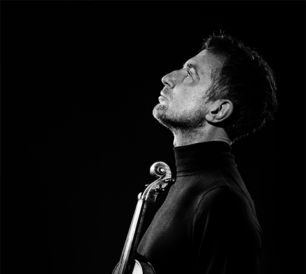
CANDLELIGHT CONCERT T. Papavrami & J.-F. Neuburger

Saturday 14 March ı 7:30 PM
One Monte-Carlo, Amphithéâtre
Before
9:00 – 12:00 AM — MASTERCLASS — Académie Rainier III

Vincent David, saxophone

Reservation
6:00 PM – PANEL DISCUSSION - One Monte-Carlo, Amphithéâtre

“Transcription: mystification or creation?”

 Jean-Frédéric Neuburger, pianist, Philippe Perrin, composer, arranger and co-founder of Lacroch’, and Bruno Mantovani, festival artistic director, moderated by Tristan Labouret, musicologist

Reservation
7:30 PM — CANDLELIGHT CONCERT — One Monte-Carlo
<div>
<p class="Standard"><b><span lang="EN-US">Johannes Brahms </span></b><span lang="EN-US">(1833-1897)<br />
</span><i><span lang="EN-US">Study No. 5 for the Left Hand after Bach&#8217;s</span></i><b> </b><i><span lang="EN-US">Chaconne (BWV 1004) &#8211; </span></i><span lang="EN-US">17 min</span></p>
</div>
<div>
<p class="Standard"><b><span lang="EN-US">Niccolò Paganini </span></b><span lang="EN-US">(1782-1840)<br />
</span><i><span lang="EN-US">Caprices for solo violin,</span></i><span lang="EN-US"> Op. 1 &#8211; </span><span lang="EN-US">20 min<br />
</span>Caprice No. 4 in C minor<br />
Caprice No. 5 in A minor<br />
Caprice No. 6 in G minor<br />
Caprice No. 9 in E major<br />
Caprice No. 24 in A minor</p>
</div>
<div>
<p class="Standard"><b><span lang="EN-US">Robert Schumann</span></b><span lang="EN-US"> (1810-1856)<br />
</span><i><span lang="EN-US">Études on Caprices by Paganini &#8211; </span></i><span lang="EN-US">20 min<br />
</span>Étude No. 1, Op. 3 (after Caprice No. 5)<br />
Étude No. 2, Op. 10 (after Caprice No. 6)<br />
Étude No. 2, Op. 3 (after Caprice No. 9)<br />
Étude No. 4, Op. 3 (after Caprice No. 13)<br />
Étude No. 5, Op. 3 (after Caprice No. 19)<br />
Étude No. 3, Op. 10 (after Caprice No. 10)</p>
</div>
<div>
<p class="Standard"><b><span lang="EN-US">Franz Liszt </span></b><span lang="EN-US">(1811-1886)</span><span lang="EN-US"><br />
</span><i><span lang="EN-US">Grandes études de Paganini</span></i><span lang="EN-US">, S.141 &#8211; 20 min<br />
</span>Étude No. 1 (after Caprices No. 5 and 6)<br />
Étude No. 2 (after Caprice No. 17)<br />
Étude No. 4 (after Caprice No. 1)<br />
Étude No. 5 (after Caprice No. 9)<br />
Étude No. 6 (after Caprice No. 24)</p>
</div>
<div>
<p class="Standard"><span lang="EN-US">***</span></p>
</div>
<div>
<p class="Standard"><b><span lang="EN-US">Johann Sebastian Bach</span></b><span lang="EN-US"> (1685-1750)<br />
</span><i><span lang="EN-US">Violin Partita No. 2 in D Minor,</span></i><span lang="EN-US"> BWV 1004 &#8211;</span><span lang="EN-US"> </span><span lang="EN-US">15 min</span></p>
</div>
<div>
<p class="Standard"><span lang="EN-US">5. Chaconne</span></p>
</div>
<div>
<p class="Standard"><b><span lang="EN-US">George Enescu </span></b><span lang="EN-US">(1881-1955)<br />
</span><i><span lang="EN-US">Violin Sonata No. 3 in A Minor, </span></i>Op. 25 &#8211; 25 min</p>
</div>
<div>
<p class="Standard"><b><span lang="EN-US">Johannes Brahms </span></b><span lang="EN-US">(1833-1897)<br />
</span><i><span lang="EN-US">Study No. 5 for the Left Hand after Bach&#8217;s</span></i><b> </b><i><span lang="EN-US">Chaconne (BWV 1004) &#8211; </span></i><span lang="EN-US">17 min</span></p>
</div>
<div>
<p class="Standard"><b><span lang="EN-US">Niccolò Paganini </span></b><span lang="EN-US">(1782-1840)<br />
</span><i><span lang="EN-US">Caprices for solo violin,</span></i><span lang="EN-US"> Op. 1 &#8211; </span><span lang="EN-US">20 min<br />
</span>Caprice No. 4 in C minor<br />
Caprice No. 5 in A minor<br />
Caprice No. 6 in G minor<br />
Caprice No. 9 in E major<br />
Caprice No. 24 in A minor</p>
</div>
<div>
<p class="Standard"><b><span lang="EN-US">Robert Schumann</span></b><span lang="EN-US"> (1810-1856)<br />
</span><i><span lang="EN-US">Études on Caprices by Paganini &#8211; </span></i><span lang="EN-US">20 min<br />
</span>Étude No. 1, Op. 3 (after Caprice No. 5)<br />
Étude No. 2, Op. 10 (after Caprice No. 6)<br />
Étude No. 2, Op. 3 (after Caprice No. 9)<br />
Étude No. 4, Op. 3 (after Caprice No. 13)<br />
Étude No. 5, Op. 3 (after Caprice No. 19)<br />
Étude No. 3, Op. 10 (after Caprice No. 10)</p>
</div>
<div>
<p class="Standard"><b><span lang="EN-US">Franz Liszt </span></b><span lang="EN-US">(1811-1886)</span><span lang="EN-US"><br />
</span><i><span lang="EN-US">Grandes études de Paganini</span></i><span lang="EN-US">, S.141 &#8211; 20 min<br />
</span>Étude No. 1 (after Caprices No. 5 and 6)<br />
Étude No. 2 (after Caprice No. 17)<br />
Étude No. 4 (after Caprice No. 1)<br />
Étude No. 5 (after Caprice No. 9)<br />
Étude No. 6 (after Caprice No. 24)</p>
</div>
<div>
<p class="Standard"><span lang="EN-US">***</span></p>
</div>
<div>
<p class="Standard"><b><span lang="EN-US">Johann Sebastian Bach</span></b><span lang="EN-US"> (1685-1750)<br />
</span><i><span lang="EN-US">Violin Partita No. 2 in D Minor,</span></i><span lang="EN-US"> BWV 1004 &#8211;</span><span lang="EN-US"> </span><span lang="EN-US">15 min</span></p>
</div>
<div>
<p class="Standard"><span lang="EN-US">5. Chaconne</span></p>
</div>
<div>
<p class="Standard"><b><span lang="EN-US">George Enescu </span></b><span lang="EN-US">(1881-1955)<br />
</span><i><span lang="EN-US">Violin Sonata No. 3 in A Minor, </span></i>Op. 25 &#8211; 25 min</p>
</div>
With intermission ***

Johannes Brahms (1833-1897)
Study No. 5 for the Left Hand after Bach’s Chaconne (BWV 1004) – 17 min

Niccolò Paganini (1782-1840)
Caprices for solo violin, Op. 1 – 20 min
Caprice No. 4 in C minor
Caprice No. 5 in A minor
Caprice No. 6 in G minor
Caprice No. 9 in E major
Caprice No. 24 in A minor

Robert Schumann (1810-1856)
Études on Caprices by Paganini – 20 min
Étude No. 1, Op. 3 (after Caprice No. 5)
Étude No. 2, Op. 10 (after Caprice No. 6)
Étude No. 2, Op. 3 (after Caprice No. 9)
Étude No. 4, Op. 3 (after Caprice No. 13)
Étude No. 5, Op. 3 (after Caprice No. 19)
Étude No. 3, Op. 10 (after Caprice No. 10)

Franz Liszt (1811-1886)
Grandes études de Paganini, S.141 – 20 min
Étude No. 1 (after Caprices No. 5 and 6)
Étude No. 2 (after Caprice No. 17)
Étude No. 4 (after Caprice No. 1)
Étude No. 5 (after Caprice No. 9)
Étude No. 6 (after Caprice No. 24)

***

Johann Sebastian Bach (1685-1750)
Violin Partita No. 2 in D Minor, BWV 1004 – 15 min

5. Chaconne

George Enescu (1881-1955)
Violin Sonata No. 3 in A Minor, Op. 25 – 25 min

Tedi Papavrami, violin
Jean-Frédéric Neuburger, piano

The revolutionary Caprices for solo violin by Paganini have fascinated generations of virtuoso pianists, as well as Bach’s Chaconne, which has been transcribed by a number of keyboard aficionados. This spectacular, and even acrobatic, concert compares the original versions of these masterpieces and the way renowned composer-pianists took hold of it. On the violin and the piano, Tedi Papavrami and Jean-Frédéric Neuberger recreate the history and unite to finish as a duet in a sonata by Enescu which touches on the limits of their instruments.

Concert Prices
Standard rate
20

Online booking

You can book your tickets on Monte-Carlo Ticket website !
INFORMATION
PARKING

In general, the night rate is applicable from 7 p.m.: €0.20 every 15 minutes*

Except for the events for which the "Festival Printemps des Arts" show package applies

* Subject to change

More information

“The Himalaya of the violinist”: this is how George Enescu nicknamed Johann Sebastian Bach’s six Sonatas and Partitas for Solo Violin, among which the Chaconne in D minor naturally stands as the “Everest”. This 15-minute piece has fascinated – and still fascinates – generations of musicians. In it, Bach transforms the monodic instrument which is the violin into an organ capable of playing a rich polyphony by tirelessly varying its timbre and texture. Struck chords, staccato playing, rich colours and arpeggios, imaginative ornamentation – the dazzling instrumental display would almost hide from sight that the writing is at the service of a formidable science of architecture and discourse. The transition to major mode in the central section of the work is a miracle that Enescu visualised as follows, according to his student Serge Blanc: “a ray of sunlight passing through a stained-glass window, landing on the quiet hands of an organist.” And for the final recapitulation of the theme, Enescu apparently would have liked “to be able to grab three more violins and five bows to have enough strength to express what one feels at such a moment”.

Among the many transcriptions that have been made of the Chaconne, that of Johannes Brahms stands out. Instead of adapting Bach’s notes to a more pianistic style, he sought to replicate the violinist’s bowing technique. In June 1877, Brahms confided to Clara Schumann:“I find that there is only one way to approach the pure pleasure this work gives, even if it is in a very diminished way: it is when I play it with my left hand alone! A comparable difficulty, a technical skill, the arpeggios, everything contributes to making me feel like a violinist!”

When Brahms delivered “his” violin-piano version of the Chaconne, the tradition of transcriptions had already been established for a long time. One of the favorite musical objects of transcriber-pianists has been Niccolò Paganini’s cycle of Caprices for solo violin. Published in 1820, this collection made a lasting impression from the moment it appeared, not only for the formidable difficulties it compiled, but also for its accomplished musical form, which made it much more than a simple exercise book. The tradition of Rossini’s bel canto is clearly perceptible in the developed Cantilenas (Nos. 4 and 6), a truly poetic imagination is conjured up (the imitation of flutes and hunting horns in No. 9), and the use of a tripartite structure allows for powerful expressive contrasts (the transition from a fluid cadenza to a perpetual saltato movement in No. 5). Finally, the collection follows a genuine progression that culminates in the eleven variations of the last Caprice(No. 24) as well as the introduction of Paganini’s ultimate invention: the spectacular left-handed pizzicato.

The young Robert Schumann was one of the first to attempt transcribing the Caprices for the piano (in 1832), soon followed by Franz Liszt (in 1838 for a first cycle and in 1851 for the Grandes Études de Paganini, S.141). Comparing the approaches of the two composers is fascinating. In the foreword to his Études, Op. 3, Schumann modestly explains his ambition: “to remain as faithful as possible to the original, while adapting his transcription to the nature and mechanism of the piano.” The first of these Études, which is based on Caprice No. 5, is a fine example of this adaptation: Schumann simply duplicates the fluid opening cadenza for two hands at the octave before adding a light accompaniment to the perpetual motion that follows. Liszt modifies the original text more extensively to serve his own piano virtuosity, even changing the very architecture of Paganini’s pieces: thus, the cadenza of Caprice No. 5, presented in a gesture that becomes increasingly expansive on the keyboard, serves as an introduction to his transcription of… Caprice No. 6! Liszt nevertheless remains faithful to the progression imagined by Paganini, ending his Grandes Études with a reinterpretation of the twenty-fourth and final Caprice.

Let us return to George Enescu, who is too often forgotten not only as an extremely gifted instrumentalist but also as a talented composer. Written in 1926, his Violin Sonata No. 3 combines these two dimensions. The violin part is inventive and unusually precise in terms of vibrato intensity and bowing positions – Enescu even goes so far as to specify, for example, that it should be played “flautato sulla tastiera colla punta del arco” (“flute-like, on the fingerboard, with the tip of the bow”). And the piano part is no less impressive. Enescu was clearly inspired by the sounds of the cimbalom when writing it, which helps to establish the “Romanian folk character” announced in the work’s subtitle. Here we are a long way from the Himalayas, as described by pianist Alfred Cortot, who performed the work with the composer. For him, the slow central movement is “a sonic evocation of the mysterious sensation of summer nights in Romania: below, the endless plain, deserted and silent; above, constellations stretching towards infinity…”

Tristan Labouret
Get the latest news
from the Printemps des arts

Rejoignez-nous
sur instagram