BEETHOVEN – RAVEL - BOULEZ Récital J.-F. Neuburger

Sunday 15 March ı 5:00 PM
One Monte-Carlo, Amphithéâtre
5:00 PM — CONCERT — One Monte-Carlo
<p style="font-weight: 400;"><strong>Ludwig van Beethoven </strong>(1770-1827)<br />
<em>Piano Sonata No. 32</em>, Op. 111 &#8211; 30 min</p>
<ol>
<li style="font-weight: 400;">Maestoso — Allegro con brio ed appassionato</li>
<li style="font-weight: 400;">Arietta. Adagio molto semplice cantabile</li>
</ol>
<p style="font-weight: 400;"><strong>Maurice Ravel</strong> (1875-1937)<br />
<em>Gaspard de la nuit</em>, M. 55 &#8211; 24 min</p>
<ol>
<li style="font-weight: 400;">Ondine</li>
<li style="font-weight: 400;">Le Gibet</li>
<li style="font-weight: 400;">Scarbo</li>
</ol>
<p style="font-weight: 400;">***</p>
<p style="font-weight: 400;"><strong>Pierre Boulez </strong>(1925-2016)<br />
<em>Deuxième Sonate pour piano </em>&#8211; 30 min</p>
<ol>
<li>Extrêmement rapide</li>
<li>Lent</li>
<li>Modéré, presque vif</li>
<li>Vif</li>
</ol>
With intermission ***

Ludwig van Beethoven (1770-1827)
Piano Sonata No. 32, Op. 111 – 30 min

  1. Maestoso — Allegro con brio ed appassionato
  2. Arietta. Adagio molto semplice cantabile

Maurice Ravel (1875-1937)
Gaspard de la nuit, M. 55 – 24 min

  1. Ondine
  2. Le Gibet
  3. Scarbo

***

Pierre Boulez (1925-2016)
Deuxième Sonate pour piano – 30 min

  1. Extrêmement rapide
  2. Lent
  3. Modéré, presque vif
  4. Vif

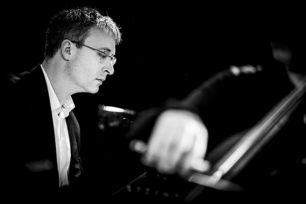
Jean-Frédéric Neuburger, piano

The tireless pianist and composer Jean-Frédéric Neuburger tackles three summits of writing for his instrument: Beethoven’s last sonata, whose ultimate movement widely opens doors onto never-before-heard worlds ; Boulez’s Sonata No. 2, a work of youth in which the composer and admirer of René Char’s poetry asserts his novel language; and Ravel’s Gaspard de la nuit which pushes the limits of virtuosity while painting rich soundscapes in subtle colours.

Concert Prices
Standard rate
20

Online booking

You can book your tickets on Monte-Carlo Ticket website !
INFORMATION
PARKING

In general, the night rate is applicable from 7 p.m.: €0.20 every 15 minutes*

Except for the events for which the "Festival Printemps des Arts" show package applies

* Subject to change

More information

“1947: the year when I met Char, and when I became aware of myself.” This confession by Pierre Boulez to Karlheinz Stockhausen reveals how much his Piano Sonata No.2, started that year, is a founding piece of work. At first glance, however, its structure does not seem revolutionary, following the four traditional movements of the classical sonata: a lively first movement that revisits the fundamentals of sonata form (exposition of the main themes, development rich in twists and turns, recapitulation of the themes), a slow second movement dominated by the principle of variation, a third movement in the style of a scherzo, and a finale with a fugue. But Boulez’s artistry lies in his ability to melt this framework or explode it from within to create a poetic world of his own.

In the first, and again in the last movement, Boulez starts with brief, assertive motifs which he then proceeds to “dissolve,” as he would demonstrate to Célestin Deliège thirty years later: “Very strong thematic structures at the beginning, very pronounced, gradually dissolve into a development that is completely amorphous from this point of view”, he says of the first movement, before explaining that he uses the same process in the slow section of the finale, “a kind of canonical fugue writing, which gradually dissolves because the intervals become more and more complex”. As for the slow movement, it progresses in the opposite direction: Boulez starts with a spare, pointillist discourse (in which the performer must “rigorously observe the silences of each counterpoint”) to which he gradually adds notes, layers, and additional textures. “It’s a way of thinking that has become very dear to me, and one that I have used several times,” he admits. Beethoven’s last sonatas come to mind when listening to this music, made up of handfuls of notes and powerful contrasts, but the connection with René Char’s poetry seems even closer: Boulez admitted that he admired “his power to gather his universe into an extremely concise expression, to send it off and throw it out far away. (…) It’s as if you were discovering a carved flint”. These words could apply to the Sonata No. 2.
Nevertheless, the parallel with Beethoven remains striking, especially with regard to the process of variation, dear to both Boulez and the master from Bonn. Beethoven concluded the last of his thirty-two sonatas with an “Arietta” in the form of a theme and variations, which surprised his publisher and patron, Adolf Schlesinger, who was astonished to see Opus 111 end after only two movements. Yet, this was indeed how the composer imagined his work, written very quickly – the autograph score is dated 13th January, 1822, less than three weeks after Opus 110. After a solemn and serious introduction, the first movement takes the form of a tempestuous sonata, quite Beethovenian overall, although as Boulez pointed out,“there is both an obviousness of form and, at the same time, complete unpredictability”. The architecture is clear, the musical ideas flow logically, organically, yet they give the impression of improvisation. Peremptory chords, hints of perpetual motion, and melodious inflections follow one another, without us knowing whether Beethoven’s flint will pierce the keyboard or shatter into pieces.

The “Arietta” then provides a striking contrast with its molto semplice e cantabile chorale. The variations that follow the exposition of the theme seem to flow naturally, with the pulse becoming increasingly pronounced. However, the writing reaches heights of complexity for the time: “no sphinx has ever imagined such an enigma”, wrote the critic of The Harmonicon about the third variation! But it is after the fourth variation that the sphinx literally escapes, in a coda where all formal reference points disappear. Beethoven then indulges in unprecedented textural games (ornaments in the upper register of the keyboard, endless trills) that eventually “dissolve”; Boulez would remember this.

While René Char inspired Boulez more or less directly for his Piano Sonata No.2, another poet was behind another French piano masterpiece of the 20th century: Aloysius Bertrand, with his collection Gaspard de la nuit, published posthumously in 1842. This work, rich in supernatural creatures and fantastical settings, captivated Maurice Ravel, and inspired his “three romantic poems of transcendent virtuosity”, in 1908, making him a worthy spiritual heir to Franz Liszt. The technical difficulty was a major challenge: Ravel consciously sought to surpass Balakirev’s very arduous Islameywith the capers of “Scarbo”, a nightmarish gnome who occupies a major place in the eponymous collection. The other two pieces in the triptych are no less inventive: “Le Gibet” is a frightening page of immobility, with the tolling of its B flat repeated tirelessly throughout the piece; as for “Ondine”, it was Marguerite Long’s favorite piece, who admired Ravel’s ability to suggest the unpredictable strokes of the mermaid’s fins while making her sing sadly on the keyboard. Unpredictability and obviousness? Perhaps that is also what Boulez loved about Ravel.

Tristan Labouret

Get the latest news
from the Printemps des arts

Rejoignez-nous
sur instagram