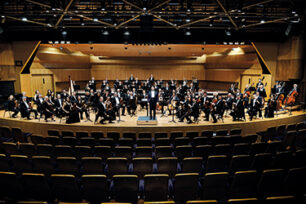
TURANGALILA-SYMPHONIE Orchestre Philharmonique de Monte-Carlo

Saturday 04 April ı 7:30 PM
Grimaldi Forum
Before
6:00 PM - LECTURE - Grimaldi Forum, Salle Apollinaire

 “The Orchestral Language of Olivier Messiaen” 
Yves Balmer, musicologist

Reservation
7:30 PM - CONCERT - Grimaldi Forum, Salle des Princes
<div>
<div>
<p class="Standard"><b><span lang="EN-US">Vincent David</span></b><span lang="EN-US"> (1974-)<br />
</span><i><span lang="EN-US">Mécanique céleste, </span></i><span lang="EN-US">for saxophone and orchestra (*) &#8211; </span><span lang="EN-US">15 min</span></p>
<p class="Standard"><b><span lang="EN-US">Olivier Messiaen </span></b><span lang="EN-US">(1908-1992)</span></p>
<p class="Standard"><i><span lang="EN-US">Turangalîla-Symphonie </span></i><span lang="EN-US">(°) &#8211; </span><span lang="EN-US">80 min</span><span lang="EN-US"><br />
</span><span lang="EN-US">      1. Introduction</span><span lang="EN-US"><br />
</span><span lang="EN-US">      2. Chant d&#8217;amour 1</span><span lang="EN-US"><br />
</span><span lang="EN-US">      3. Turangalîla 1</span><span lang="EN-US"><br />
</span><span lang="EN-US">      4. Chant d&#8217;amour 2</span><span lang="EN-US"><br />
</span><span lang="EN-US">      5. Joie du sang des étoiles</span><span lang="EN-US"><br />
</span><span lang="EN-US">      6. Jardin du sommeil d&#8217;amour</span><span lang="EN-US"><br />
</span><span lang="EN-US">      7. Turangalîla 2</span><span lang="EN-US"><br />
</span><span lang="EN-US">      8. Développement de l&#8217;amour</span><span lang="EN-US"><br />
</span><span lang="EN-US">      9. Turangalîla 3</span><span lang="EN-US"><br />
</span><span lang="EN-US">      10. Final</span></p>
</div>
</div>
<div>
<div>
<p class="Standard"><b><span lang="EN-US">Vincent David</span></b><span lang="EN-US"> (1974-)<br />
</span><i><span lang="EN-US">Mécanique céleste, </span></i><span lang="EN-US">for saxophone and orchestra (*) &#8211; </span><span lang="EN-US">15 min</span></p>
<p class="Standard"><b><span lang="EN-US">Olivier Messiaen </span></b><span lang="EN-US">(1908-1992)</span></p>
<p class="Standard"><i><span lang="EN-US">Turangalîla-Symphonie </span></i><span lang="EN-US">(°) &#8211; </span><span lang="EN-US">80 min</span><span lang="EN-US"><br />
</span><span lang="EN-US">      1. Introduction</span><span lang="EN-US"><br />
</span><span lang="EN-US">      2. Chant d&#8217;amour 1</span><span lang="EN-US"><br />
</span><span lang="EN-US">      3. Turangalîla 1</span><span lang="EN-US"><br />
</span><span lang="EN-US">      4. Chant d&#8217;amour 2</span><span lang="EN-US"><br />
</span><span lang="EN-US">      5. Joie du sang des étoiles</span><span lang="EN-US"><br />
</span><span lang="EN-US">      6. Jardin du sommeil d&#8217;amour</span><span lang="EN-US"><br />
</span><span lang="EN-US">      7. Turangalîla 2</span><span lang="EN-US"><br />
</span><span lang="EN-US">      8. Développement de l&#8217;amour</span><span lang="EN-US"><br />
</span><span lang="EN-US">      9. Turangalîla 3</span><span lang="EN-US"><br />
</span><span lang="EN-US">      10. Final</span></p>
</div>
</div>
<div>
<div>
<p class="Standard"><b><span lang="EN-US">Vincent David</span></b><span lang="EN-US"> (1974-)<br />
</span><i><span lang="EN-US">Mécanique céleste, </span></i><span lang="EN-US">for saxophone and orchestra (*) &#8211; </span><span lang="EN-US">15 min</span></p>
<p class="Standard"><b><span lang="EN-US">Olivier Messiaen </span></b><span lang="EN-US">(1908-1992)</span></p>
<p class="Standard"><i><span lang="EN-US">Turangalîla-Symphonie </span></i><span lang="EN-US">(°) &#8211; </span><span lang="EN-US">80 min</span><span lang="EN-US"><br />
</span><span lang="EN-US">      1. Introduction</span><span lang="EN-US"><br />
</span><span lang="EN-US">      2. Chant d&#8217;amour 1</span><span lang="EN-US"><br />
</span><span lang="EN-US">      3. Turangalîla 1</span><span lang="EN-US"><br />
</span><span lang="EN-US">      4. Chant d&#8217;amour 2</span><span lang="EN-US"><br />
</span><span lang="EN-US">      5. Joie du sang des étoiles</span><span lang="EN-US"><br />
</span><span lang="EN-US">      6. Jardin du sommeil d&#8217;amour</span><span lang="EN-US"><br />
</span><span lang="EN-US">      7. Turangalîla 2</span><span lang="EN-US"><br />
</span><span lang="EN-US">      8. Développement de l&#8217;amour</span><span lang="EN-US"><br />
</span><span lang="EN-US">      9. Turangalîla 3</span><span lang="EN-US"><br />
</span><span lang="EN-US">      10. Final</span></p>
</div>
</div>
<div>
<div>
<p class="Standard"><b><span lang="EN-US">Vincent David</span></b><span lang="EN-US"> (1974-)<br />
</span><i><span lang="EN-US">Mécanique céleste, </span></i><span lang="EN-US">for saxophone and orchestra (*) &#8211; </span><span lang="EN-US">15 min</span></p>
<p class="Standard"><b><span lang="EN-US">Olivier Messiaen </span></b><span lang="EN-US">(1908-1992)</span></p>
<p class="Standard"><i><span lang="EN-US">Turangalîla-Symphonie </span></i><span lang="EN-US">(°) &#8211; </span><span lang="EN-US">80 min</span><span lang="EN-US"><br />
</span><span lang="EN-US">      1. Introduction</span><span lang="EN-US"><br />
</span><span lang="EN-US">      2. Chant d&#8217;amour 1</span><span lang="EN-US"><br />
</span><span lang="EN-US">      3. Turangalîla 1</span><span lang="EN-US"><br />
</span><span lang="EN-US">      4. Chant d&#8217;amour 2</span><span lang="EN-US"><br />
</span><span lang="EN-US">      5. Joie du sang des étoiles</span><span lang="EN-US"><br />
</span><span lang="EN-US">      6. Jardin du sommeil d&#8217;amour</span><span lang="EN-US"><br />
</span><span lang="EN-US">      7. Turangalîla 2</span><span lang="EN-US"><br />
</span><span lang="EN-US">      8. Développement de l&#8217;amour</span><span lang="EN-US"><br />
</span><span lang="EN-US">      9. Turangalîla 3</span><span lang="EN-US"><br />
</span><span lang="EN-US">      10. Final</span></p>
</div>
</div>
Without intermission

Vincent David (1974-)
Mécanique céleste, for saxophone and orchestra (*) – 15 min

Olivier Messiaen (1908-1992)

Turangalîla-Symphonie (°) – 80 min
      1. Introduction
      2. Chant d’amour 1
      3. Turangalîla 1
      4. Chant d’amour 2
      5. Joie du sang des étoiles
      6. Jardin du sommeil d’amour
      7. Turangalîla 2
      8. Développement de l’amour
      9. Turangalîla 3
      10. Final

Vincent David, saxophone
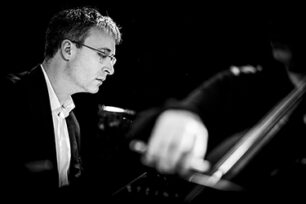
Jean-Frédéric Neuburger, piano
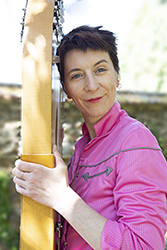
Nathalie Forget, ondes Martenot
Orchestre Philharmonique de Monte-Carlo
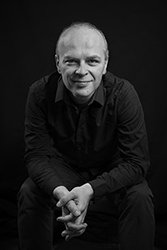
Bruno Mantovani (*) and Kazuki Yamada (°), conductors

The Orchestre Philharmonique de Monte-Carlo takes on an immense work of the symphonic repertoire: the Turangalîla-Symphonie, a vast hymn to joy and love composed by Olivier Messiaen for over a hundred musicians – halfway between a ballet for orchestra and a piano concerto, and featuring the supernatural sounds of the ondes Martenot. In preamble, the Mécanique céleste by and with composer-saxophonist Vincent David will launch the orchestra into zero gravity space.

Concert prices
CAT.1
36
CAT.2
26

Online booking

You can book your tickets on Monte-Carlo Ticket website !
INFORMATION
PARKING

In general, the night rate is applicable after 8 p.m.: €0.20 every 15 minutes*


Except for the events for which the "Festival Printemps des Arts" show package applies: 6€ for parking during the day, upon showing your concert ticket

* Subject to change

More information

On 17 July 17 1946, Olivier Messiaen enthusiastically set about writing a unique work for large symphony orchestra. The commission he had just received offered him rare freedom: Serge Koussevitsky, music director of the Boston Symphony Orchestra, imposed no deadlines, no restrictions on length, and no constraints on the size of the orchestra. The composer took full advantage of this: completed two years later, on 29 November 1948, his Turangalîla-Symphonie is an epic work lasting nearly eighty minutes, in ten movements, for just over a hundred musicians.

Its title, taken from Sanskrit, is rich in meaning, which the composer sums up as follows: his work is “a love song (…), a hymn to joy (…), joy as conceived by someone who has only glimpsed it in the midst of misfortune, that is to say, a superhuman, overflowing, blinding and gigantic joy”. In his comments on the score, Messiaen compares the passion of his work to the love of Tristan and Isolde: “it is fatal, irresistible love that transcends everything, that cancels everything beyond itself”.

Messiaen also refers to another Tristan, that of Richard Wagner, deciding like him to use leitmotifs, or “cyclical themes.” The most important of these is none other than the “love theme”. Presented with great gentleness and extreme slowness, it reigns supreme in the “Garden of Love’s Sleep” in the sixth movement, the true headstone of the score. It reappears with even greater power in the eighth section of the work, “Development of Love” (which alludes to “lovers who can never break free,” according to Messiaen) and explodes in the “Finale.” The two other main themes are a brutal, heavy, terrifying “statue theme” in descending thirds, a sort of Vénus d’Ille, Prosper Mérimée’s fatal statue, embodied by the fortissimo trombones; its opposite, the “flower theme”, is entrusted to the clarinets pianissimo, and Messiaen compares it “to the tender orchid, the decorative fuchsia, the red gladiolus, the overly supple morning glory”.

Based on these themes, Messiaen builds a dramatic line that runs through every state of emotion: the irrepressible fifth movement (“Joie du sang des étoiles” or “Joy of the Blood of the Stars”) conjures up the union of lovers (“to understand the excesses of this piece, one must remember that the union of true lovers is for them a transformation, and a transformation on a cosmic scale”), while the terrible seventh movement (“Turangalîla 2”) refers to the torment endured by the character in Edgar Allan Poe’s short story “The Pit and the Pendulum”, in which a prisoner sees a sharp blade swinging toward him like a pendulum.

Messiaen is very talkative about the argument of his work and his taste for rhythmic constructions, but less so about the models that inspired him. However,  we can but notice that the composer draws on the melodic-rhythmic eloquence of André Jolivet (notably borrowing a turn of phrase from the second of his Cinq Incantations, “Pour que l’enfant qui va naître soit un fils”). And that some of his expressive power emulates Stravinsky’s Rite of Spring, both in the layered orchestration and in some melodic phrases: the clarinet solo that opens the third movement (“Turangalîla 1”) is thus directly derived from the opening bassoon solo in Stravinsky’s Rite.

Turangalîla can be heard as a ballet without dancers or an opera without words, in which the main characters are the instruments: the piano, the true soloist of this quasi-concerto, plays a leading role, particularly in the “Garden of the Sleep of Love,” where it weaves a counterpoint of birdsong above the lovers. As for the ondes Martenot, an electronic instrument invented in 1928 by Maurice Martenot and much loved by Messiaen, their extraordinary timbre brings “a touch of inhumanity and a strong dose of immateriality”, according to the composer. Through the ethereal sound of this instrument is expressed the voice of magic at work in Tristan and Isolde (the love potion), with all its seductive and frightening qualities.

As a prelude to the monumental Turangalîla, the triptych Mécanique céleste, written in 2023 by Vincent David, looks to the heavens that so inspired Messiaen, but from a perspective that is less mystical than playful: the saxophonist-composer had fun designing a score in the spirit of the mobiles by the American sculptor Alexander Calder. The soprano saxophone seems to spin around in perpetual motion, leaving a trail in the orchestra as the different sections echo the notes of the solo part. However, the dynamics are disrupted up to the point of explosion, giving way to “sound dust” (according to the composer) that gradually organises itself into a new musical world.

The swirling finally resumes with renewed vigor, on repeated notes, in a movement that gradually accelerates, “as if the approach of the black hole were imminent”. While the composer’s saxophone is undoubtedly the main character in the work, it would be wrong to consider the orchestral instruments as decorative satellites: the refinement of the orchestral writing, in a formidable ballet of timbres, has something of the joy of the stars at work in Turangalîla.


Tristan Labouret
Get the latest news
from the Printemps des arts

Rejoignez-nous
sur instagram