


“Music seems to be the most exacting of the arts, the most difficult to cultivate, and whose productions are the most rarely presented in the conditions needed to appreciate their real value.”
This sentence by Berlioz, which is probably no less relevant today, introduced to the world of a composer whom we discover as a first-rate writer, and a columnist commenting the European musical life with scathing verve. Between 1823 and 1863, Berlioz signed almost 900 columns which – with cruel irony – constituted his only stable source of income.
Berlioz’s remarkably rich literary work reveals him to be a fierce and passionate observer of the musical mores of his time. His writings on the instrument – that “emotions-stirring machine” which he knew how to set in motion better than any other composer of his era – reveal both the genius of the creator and the pen of the polemicist. From the bass drum mistreated by mediocre composers to the subtleties of orchestration, from incompetent conductors to the “grotesques of music”, Berlioz brushes a strikingly true picture of the music scene tinged with dark humor. We encounter the bass drum player so conscientious that he refuses encouragement, opera directors obsessed with box office receipts, and conductors who botch Beethoven with impunity. But beyond those fierce portraits emerges an intimate confession: how does the artist survive isolation? Which secret wound feeds this creative rage? Between social satire and personal confession, Berlioz takes us into the most disturbing corners of the romantic soul.
This concert-reading reveals the hidden side of musical romanticism – not only creative exaltation, but also the daily struggle of an artist grappling with the realities of his time. For behind every page of Berlioz lies a modern question: how can art survive in a world that favors commerce over beauty?
I have selected and “orchestrated” these texts in order to reveal their secret dramatic springs: behind the acerbic polemicist, we gradually discover the intimate man, grappling with his inner demons, haunted by the romantic melancholy that nourishes his creative genius. My wish is to make Berlioz’s voice heard, by turns caustic and melancholy, technical and poetic, disillusioned and passionate. It is a great romantic monologue that transcends the ages to question our current relationship with art.
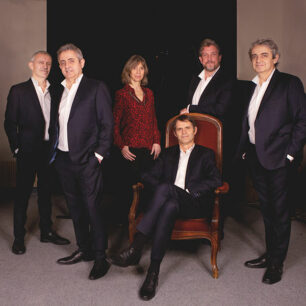
Quintette Moraguès, a legendary ensemble founded in 1980, accompanies this literary journey. Thanks to David Walter’s inspired transcriptions, these exceptional musicians, also soloists in the most prestigious Parisian orchestras, have expanded the wind quintet repertoire and established its reputation. Their collaboration, spanning more than four decades, transforms each musical performance into a sensitive commentary on Berlioz’s work. They are joined by pianist Claire Désert, a magnificent soloist with a deep understanding of the chamber spirit.
The art of transcription for wind quintet and piano here reveals its full power: the “Hungarian March” from La Damnation de Faust recovers its popular accents, while the delicate pages of L’Enfance du Christ reveal their profound humanity. These skillful reductions, far from betraying the original, illuminate its essence: what is it that remains of the Symphonie fantastique once stripped of its orchestral splendor? Its melodic truth, its rhythmic invention, that “driving idea” which runs through the work like obsession runs through man. Chamber music thus becomes the ideal laboratory for examining Berlioz’s genius, showing how his greatest inspirations often arise from a simple melodic line, an irresistible rhythm, or an unexpected timbre. We will hear Berlioz as never before: no longer the master of large ensembles, but the inventor of never-before-heard musical languages, the poet of sounds who transforms each instrument into a singular voice.
A unique dialogue is established between words and sounds: Berlioz’s scores resonate with his own reflections on the art of writing for the orchestra, creating a theatricality in which music becomes the most eloquent commentary. L’Enfance du Christ, La Symphonie fantastique, and Les Nuits d’été take on a new dimension, illuminated by the thoughts of their creator.
This programme reveals Berlioz in his entirety: the man who revolutionised the modern orchestra while describing with ruthless lucidity the obstacles facing creative genius. A show where the beauty of art challenges the reality of the era, where the timelessness of music meets the burning topicality of social criticism.
“We need love, enthusiasm, passionate embraces, we need the grand life!” claimed Berlioz. This demand, this thirst for the absolute, spans the centuries and still taunts us today: what place do we reserve today to this “high life” of art?
Dorian Astor