The Italians “sound” them, the Spanish “touch” them, while the French and the English speakers “play” them. Whether a viola, an oboe or a vibraphone, instruments are the vectors of musical language, they are necessary to materialise the composer’s thought and pass on the music piece and the emotion it encapsulates to the audience. But do we really know these objects which seem familiar to us while remaining quite mysterious to those who don’t practice them? Actioning an instrument is above all a matter of technique. From the young learner producing his or her first sounds – often unbearable to adult ears – to the virtuoso who skillfully navigates the pitfalls of the most complex works, the instrumentalist is a translator, bringing the notes written on a score to life and seeking out the style that hides beyond the musical text. Each instrument has its own unique origins and evolution. While today’s violin is much the same as that of the 16th century, the modern concert piano bears little resemblance to the one Ludwig van Beethoven composed for. Wind instruments have undergone constant evolution, increasing their virtuosity and sound power tenfold. As for percussion instruments, a family at once primitive, non-European and modern, they have undergone spectacular development alongside the emergence of contemporary musical languages.
This 2026 edition of the Printemps des Arts festival will put music instruments under the spotlight. Ancient and modern stringed instruments will interact across different eras and aesthetics. The Danel and Mosaïques quartets will contrast gut strings and metal strings, curved bows and straight bows, while Les Ambassadeurs ~ la Grande Écurie, a period ensemble, will accompany the harpsichord and fortepiano in concertos by Wolfgang Amadeus Mozart and the Bach family.
Jean-Frédéric Neuburger, a versatile musician, will perform works of extraordinary virtuosity. From the premiere of the Piano Concerto by composer Marc Monnet (and former director of the Printemps des Arts) to Olivier Messiaen’s popular and monumental Turangalîla-Symphonie, via landmark works by Pierre Boulez (Piano Sonata No.2) and Ludwig van Beethoven (Piano Sonata Op. 111) as well as a dialogue between Niccolò Paganini (performed by violinist Tedi Papavrami) and his piano transcribers Robert Schumann and Franz Liszt – this exceptional pianist will take us on a genuine marathon of frenetic keys and hammers.
However, the piano will not be the only vector of virtuosity. Indeed, violinist Alice Julien-Laferrière and her Ensemble Artifices will have us navigate technically demanding repertoires of the late 17th century.
A universal and essential instrument, the voice will be equally celebrated, starting with the opening concert, when the La Venexiana ensemble will sing a selection of madrigals by Claudio Monteverdi and Carlo Gesualdo, alternating with works for those true miniature organs that are the microtonal accordions played by Duo XAMP. Another prestigious vocal group, the Ensemble Gilles Binchois, will be back in Monaco to propose a repertoire of Italian monodic music of the early 14th century, to celebrate the 150th anniversary of the diplomatic representation of the Principality of Monaco in Spain.
As respects Spain, the Festival will also welcome a production of Les rois mages, a chamber opera written and conducted by the internationally renowned Madrid-based composer Fabián Panisello. Finally, a “battle” will oppose a tenor and a counter-tenor in a Vivaldi repertoire with the I Gemelli ensemble led by the fanciful, fantastic tenor Emiliano Gonzalez Toro.
The spoken voice will also be highlighted. First, in the Odyssée TransAntarctic, a show for all audiences composed by Graciane Finzi in tribute to Antarctica, and in the closing concert, with pianist Claire Désert and Quintette Moraguès, who will perform transcriptions of Hector Berlioz music in alternation with readings of some of his articles, selected and recited by playwright Dorian Astor.
Another instrument that has spectacularly bloomed in the last decades, the saxophone, will be showcased by Vincent David, a musician renowned around the world. An instrumentalist and composer, he will let us hear his concerto, Mécanique céleste, played together with the Orchestre Philharmonique de Monte-Carlo. He will also offer a very contemporary programme with cellist Éric-Maria Couturier, to be discovered at the Car Collection of Rainier III, Prince of Monaco.
The organ will again play an important role in this year’s festival, as in the previous ones. Olivier Latry, a true master of this instrument and titular organist at Notre-Dame de Paris, will have the Monaco Cathedral echo with a repertoire highlighting the expressive diversity of his instrument. As for jazz music, it will be represented by the French-Armenian pianist Yessaï Karapetian, who will present a new programme combining a traditional ensemble with instruments from his native country, notably the duduk.
Instrumental transgressions will also be celebrated. Pianist Claudine Simon will propose her creation of a show around the deconstruction of a piano and its repertoire, bringing together music, the reading of texts by Bastien Gallet, and visual effects.
The Caravaggio ensemble will offer festival audiences a new work conceived by composers and instrumentalists Benjamin de la Fuente and Samuel Sighicelli, combining acoustic and electronic instruments with recitation. Finally, François Salès will present a delightful show for all ages with his acoustic oboe and its electronic version, summarising Richard Wagner’s Ring Cycle in just one hour!
A postlude to this festival will feature the revival of two Miniatures choreographed by Jean-Christophe Maillot in 2005 as well as the creation of four new movements showcasing four major composers of our time.
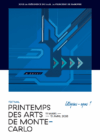
An Indian night will allow us to discover the enthralling music of that country and the wondrous sounds of traditional instruments. Organology – the science at the heart of this season – will raise countless questions on the relationship between instruments and aesthetics, the evolution of the musical language, and geographic peculiarities. Illustrated by the energetic works of painter Yves Millecamps, Printemps des arts 2026 is a true whirlwind, a celebration of speed and transcendence, of motion and trajectory.
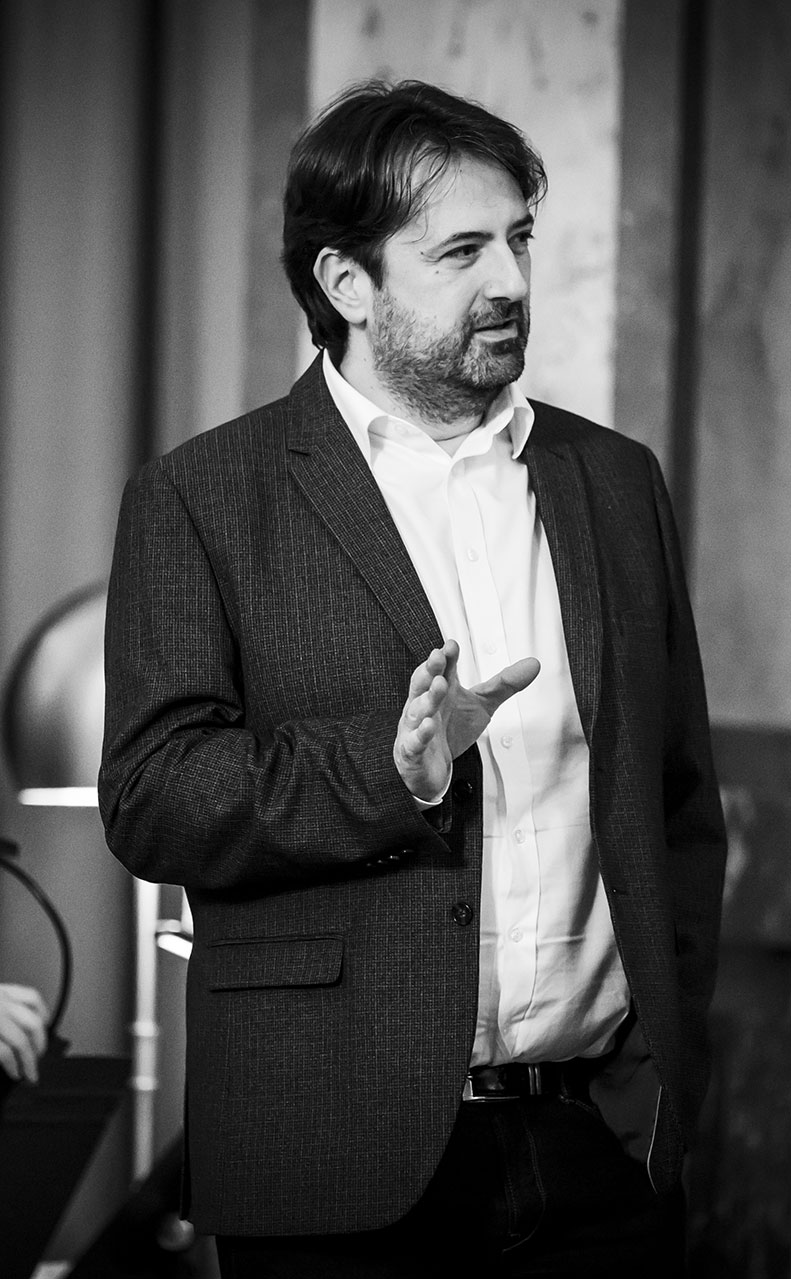
Bruno Mantovani,
artistic director